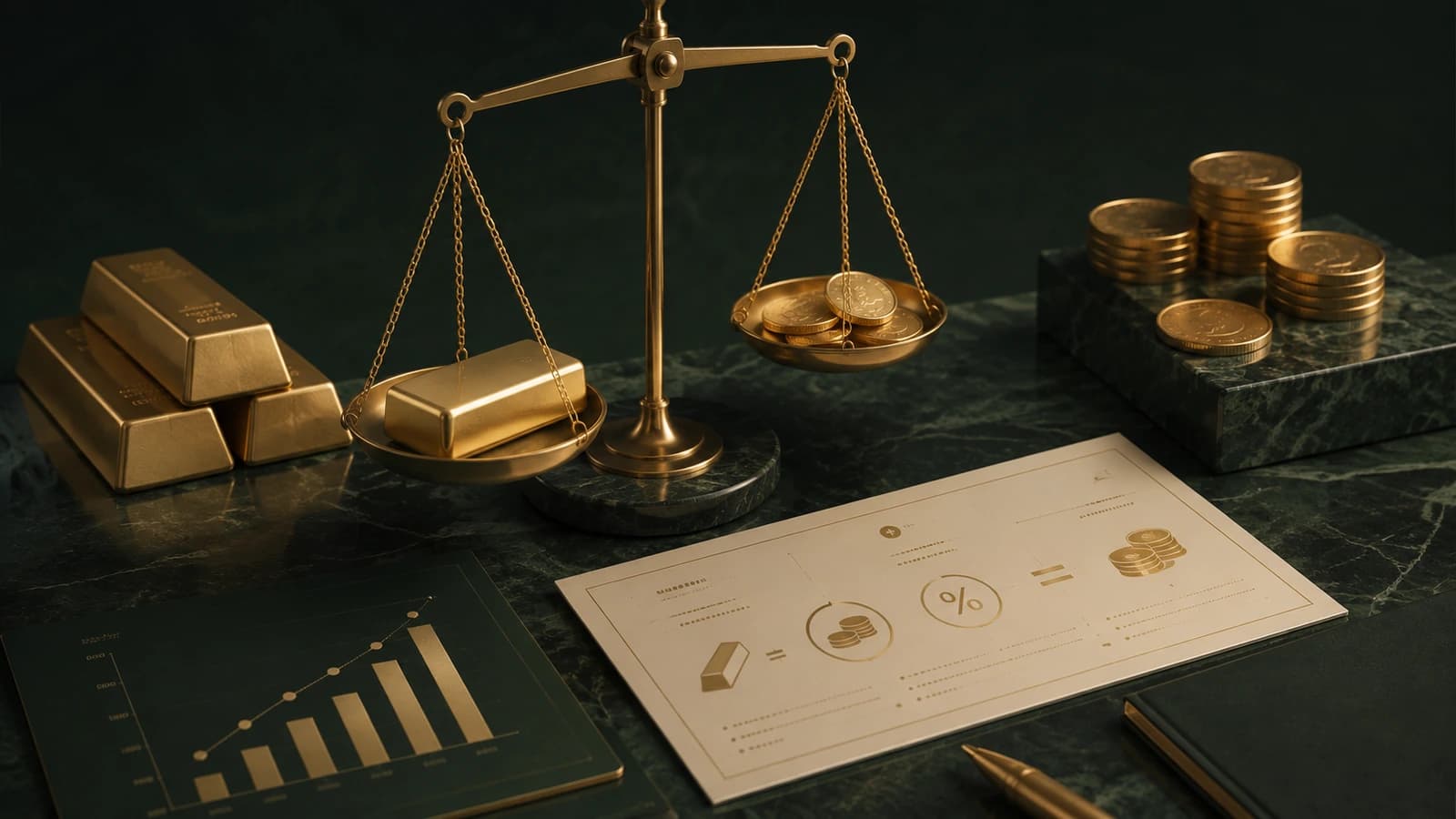
A bullion branch buys gold content. That is true for a sealed kilo bar and for a broken 21k bracelet. What differs is how much of the piece is pure gold — and what, if anything, is paid beyond the metal.
Investment bullion is typically 999.9 fine (or a documented coin purity). Packaging, assay certificate, and serial reduce uncertainty. Buyback follows live spot minus a disclosed margin — stated in writing.
Jewellery is an alloy. A 100g bracelet in 21k contains 87.5g of pure gold. That pure weight — not the total weight — is what the branch calculates on. Design, brand, and workmanship are not paid at a melt buyer.
Scrap and broken pieces follow the same arithmetic after purity is established — usually by XRF at the branch in your presence.
If the object has genuine artistic, antique, or sentimental value beyond its metal, take it to a specialist who prices the piece — not only the gold. A fair melt price is not always the right price for the object.
Pure gold is a soft metal. You can very nearly scratch it with a fingernail. That is why jewellery is not made from it, and it is exactly why bullion is.
Read MoreA seller is always in a weaker position than a buyer. The buyer can wait. The seller usually needs the money now. People who know that will use it.
Read MoreWhat XRF does, what it does not claim, and why the test should happen in front of you — not behind a closed door.
Read More