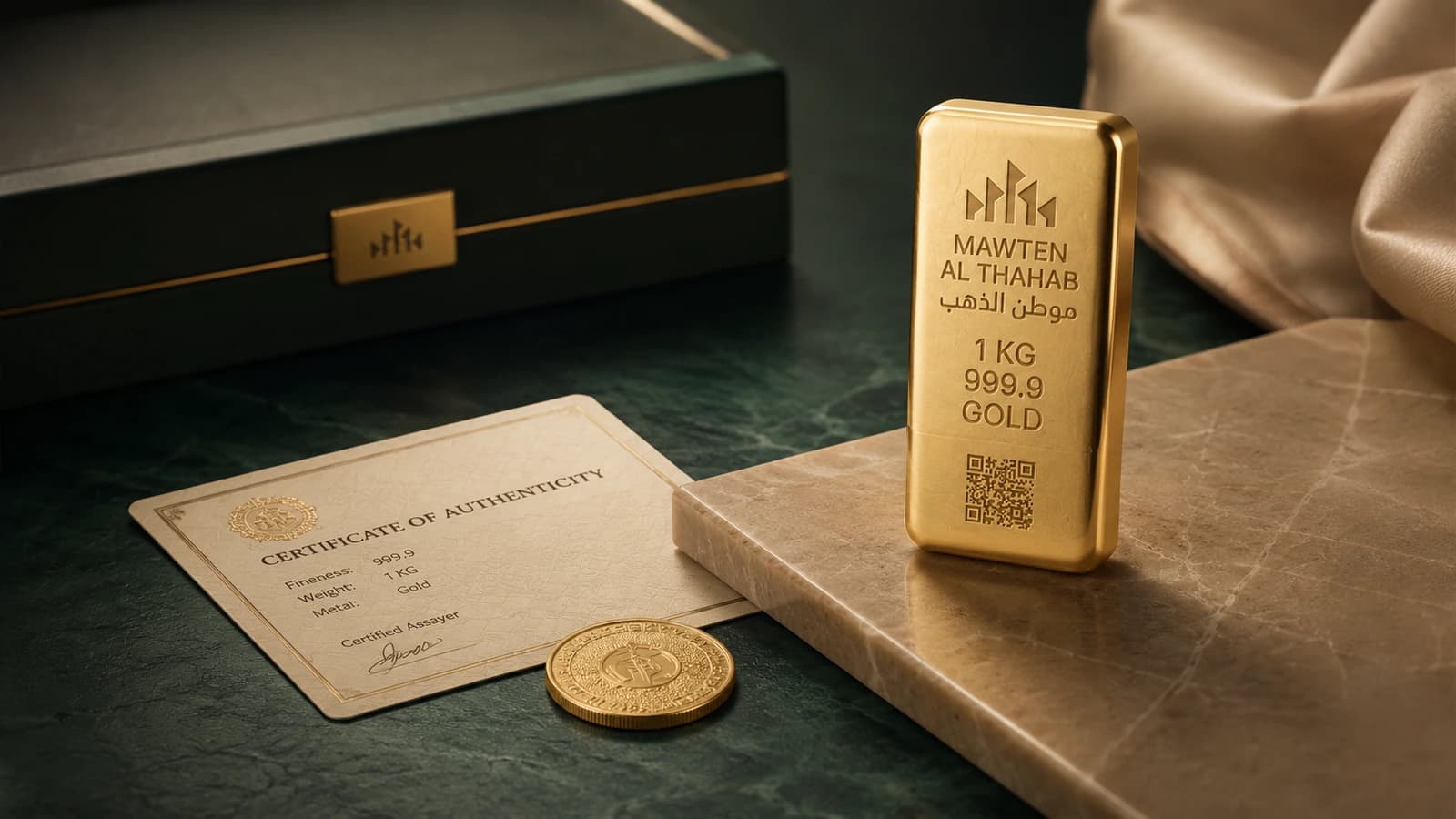
Pure gold is a soft metal. You can very nearly scratch it with a fingernail. That is why jewellery is not made from it, and it is exactly why bullion is.
There are two ways of measuring how pure gold is, and they say the same thing in different languages.
The first is per thousand. When you see 999.9 on a bar, it means 999.9 parts out of every thousand are gold. That is 99.99%. It is the highest purity commercially available, and it is sometimes called "four nines."
The second is karat, which is out of twenty-four. 24k means pure gold. 21k means twenty-one parts out of twenty-four are gold and the rest is something else, usually copper and silver. 18k means eighteen out of twenty-four, or 75%.
To convert: divide the karat by 24 and multiply by a hundred. 21k is 87.5%. 18k is 75%.
A bar is not worn and does not get knocked about. Its only job is to be gold, so the purer it is, the better it does that job.
Jewellery has a different job. It has to survive daily wear, and pure gold does not. So it gets mixed with other metals to harden it. 21k is the most common alloy in the Gulf; 18k is more common in Europe.
This is not a trick. A 21k bracelet is not "fake gold." It is gold designed to be worn.
Here is where it gets practical. When you sell jewellery, we are not buying the bracelet. We are buying the gold inside it.
A hundred-gram bracelet in 21k contains 87.5 grams of pure gold. That is what we pay on. The total weight is a hundred grams, but the gold in it is less.
A lot of people are caught out by this and assume it is a hidden deduction. It is not. It is simply that thirteen grams of the bracelet are not gold.
We pay nothing for it. That is a hard thing to hear, but it is the truth.
What you originally paid for the bracelet probably included the gold, the workmanship, the shop's margin, and maybe a brand name. When you sell it to us as gold, all of that disappears. Only the metal is left.
If a piece has genuine artistic or antique value, do not sell it to a bullion dealer. Take it to someone who values the object. We value the metal, and that is all we promise.
Do not rely on the stamp alone. Stamps can be faked.
The reliable method is an XRF test: an X-ray beam is aimed at the piece and reads its metal composition in seconds, without scratching it or harming it. It works on bars and on jewellery.
Ask for the test to be done in front of you. If anyone refuses, ask yourself why.
When you ask what gold costs, you get two numbers — not one: live global spot in Riyals, plus the declared margin that turns raw metal into a finished bar.
Read MoreThree options, and each one costs you something. There is no best answer in the abstract, only the one that fits your situation. Here are the trade-offs, plainly.
Read MoreThis explains the arithmetic. It is not a religious ruling. We are bullion dealers, not scholars, and if your situation is unusual you should ask someone qualified.
Read More