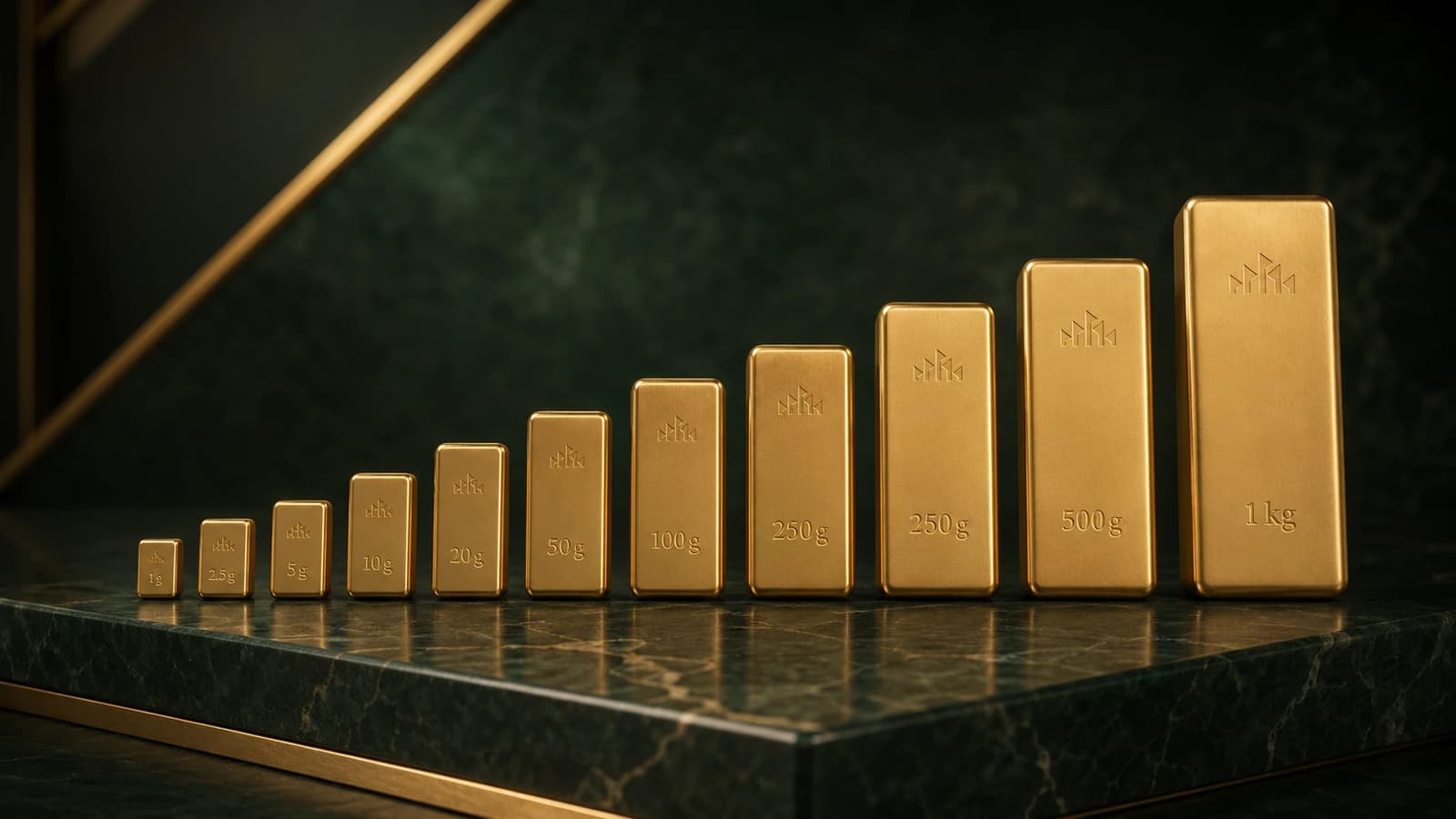
Three options, and each one costs you something. There is no best answer in the abstract, only the one that fits your situation. Here are the trade-offs, plainly.
Lowest margin, especially in the bigger weights. You are paying for gold and as little else as possible.
The catch is that it is one solid piece. You cannot sell half of it. Someone who bought a kilo and then needs twenty thousand riyals has to liquidate the whole kilo, including the part he never meant to sell.
The margin is higher than a bar of the same weight, and that annoys a lot of people. But what you are paying for is not extra gold. It is recognition.
A sovereign coin is known in every market. Sell it in Cairo or London or Dubai and the buyer knows what it is immediately, without a long inspection. An obscure bar may take some convincing.
That recognition has value, and the margin is its price. If you do not expect to sell outside the Kingdom, you may not need to pay it.
A set of small pieces instead of one big one. The total margin is higher than a single bar of the same weight, because you are paying the minting cost several times over rather than once.
What that extra margin buys you is the ability to cash out in part. You sell one piece or two and keep the rest.
Ask yourself one question: how likely am I to need part of this money before I need all of it?
If the answer is "quite likely" — your income is uneven, you have expenses coming, or this is your first time buying and you honestly do not know yet how you will behave — take the package or several mid-sized bars. Pay the flexibility margin. You will use it.
If the answer is "not likely" — this is genuinely surplus money and you do not intend to touch it for years — take the largest weight you can afford. Save the margin.
Do not make a single kilo your first purchase. We have watched this happen more than once: someone reads that the margin is lower, buys the biggest weight, then needs part of the money eight months later and discovers his only option is to sell all of it.
The margin he saved did not come close to covering what it cost him to sell at a moment he had not chosen.
When you ask what gold costs, you get two numbers — not one: live global spot in Riyals, plus the declared margin that turns raw metal into a finished bar.
Read MorePure gold is a soft metal. You can very nearly scratch it with a fingernail. That is why jewellery is not made from it, and it is exactly why bullion is.
Read MoreA seller is always in a weaker position than a buyer. The buyer can wait. The seller usually needs the money now. People who know that will use it.
Read More